
Team Coaching – Starve the Silos & Fuel the Synergy
 obijames
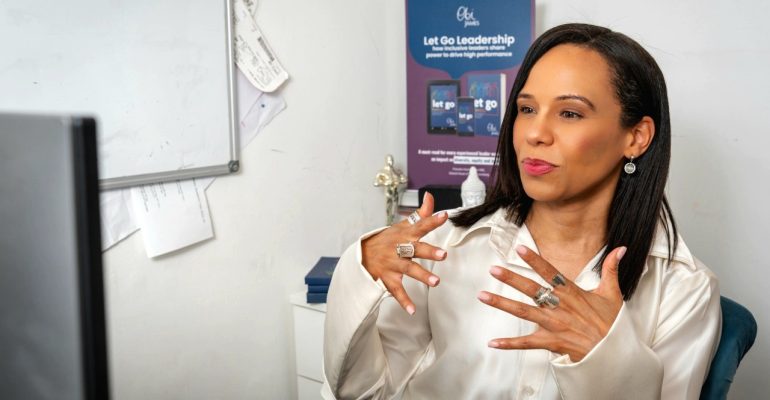
As I kick off another 12‑month Senior Leadership Team Accelerator programme this morning, I’m still buzzing from the journey I’ve just completed with the executive team of “ApexTech Global” - a name I’m using to protect their privacy. Eight sharp leaders arrived as isolated high‑performers; they left as one cohesive force. Remembering their transformation fuels my excitement for the cohort that starts today.
The programme cadence was simple but potent: half‑day sessions every six weeks for 12 months, each followed by homework sprints that demanded real‑world application before we met again. Inside the room we tackled the big levers: crafting a shared vision and team purpose; codifying a conflict protocol that encouraged heat without harm; practising constructive‑conversation drills; and running silo‑busting simulations that forced leaders to solve problems for the enterprise, not just their domains.
Between sessions they shadow‑swapped, peer‑coached, and co‑authored succession plans that spanned the whole organisation;
…breaking the habit of “talent‑hugging” that had put them at risk of losing rising stars to the market.
The turning point came mid‑programme when a product launch wobbled. Instead of defaulting to blame or retreating to their silos, the team used the conflict protocol we’d rehearsed: thirty minutes of structured debate, followed by a unified recovery plan that they co‑presented to 600 staff. What could have become a reputational bruise turned into their proof of concept for collective leadership.
By month nine cross‑functional initiatives were firing faster, engagement scores had jumped, and the finance VP told me he’d slept through the night for the first time in years. More important, they had installed rituals – short check‑ins, rotating initiative ownership, quarterly shared‑succession reviews – that will keep the gains alive long after my role ends.
5 Ways ApexTech’s Constellation Now Outshines Its Individual Stars
- One‑voice strategy. Every leader now tells the same three‑year story to investors and teams, erasing mixed messages that once confused the market.
- Healthy, swift conflict. Disagreement happens face‑to‑face, in real time, guided by an agreed protocol; decisions are sharper and faster.
- Shared ownership of talent. Succession planning became an enterprise asset, not a personal hoard, reducing the risk of star players walking.
- System‑wide thinking. Leaders solve for “best‑for‑ApexTech,” seeing how finance touches product, how HR touches customer success, and baking that into every initiative.
- Cultural ripple effect. Direct reports have copied the check‑ins, feedback loops and sprint reviews, multiplying the impact far beyond the boardroom.
ApexTech’s journey reminds me why I love this work:
Individual brilliance only becomes organisational power when the senior team learns to think, decide and lead together.
If your top table looks strong on paper yet feels heavy in practice, maybe it’s time for your own collective hero’s journey.
Want an honest read on your own leadership – are you enabling a real team or managing a group of solo performers? Take our free Let Go Leadership Scorecard to assess your leadership impact on your team and get a personalised action plan.
About the Author
Obi James is an award‑winning Finnish‑Nigerian executive coach and #1‑bestselling author of Let Go Leadership. For 20+ years she has helped senior teams across Europe, Africa and the Americas turn inclusion into a performance advantage – drawing on in‑house stints in IBD and HR at Morgan Stanley, Deloitte and Bank of America, and engagements with Bloomberg, the NHS, the Greater London Authority and more. A sought‑after facilitator, keynote speaker and Independent Non‑Executive Director, Obi blends systemic thinking, deep democracy and behavioural science to develop leaders to share power, embrace healthy conflict and unlock collective potential.